- Homepage
- Times of India
- The Integrated SEO Framework: Future-Proofing Your Brand in 2026
The Integrated SEO Framework: Future-Proofing Your Brand in 2026
 Saptak Chattopadhyay
Posted on
Saptak Chattopadhyay
Posted on
A SaaS startup in Whitefield was ranking #1 on Google for three important keywords. But when Google launched AI Overview, their organic traffic dropped by 34% in just eight weeks, even though their rankings did not change. The position was still #1, but users started clicking less because attention shifted elsewhere.
This shows how search works today. It is not just about ranking anymore. It is about how visible you are across different places.
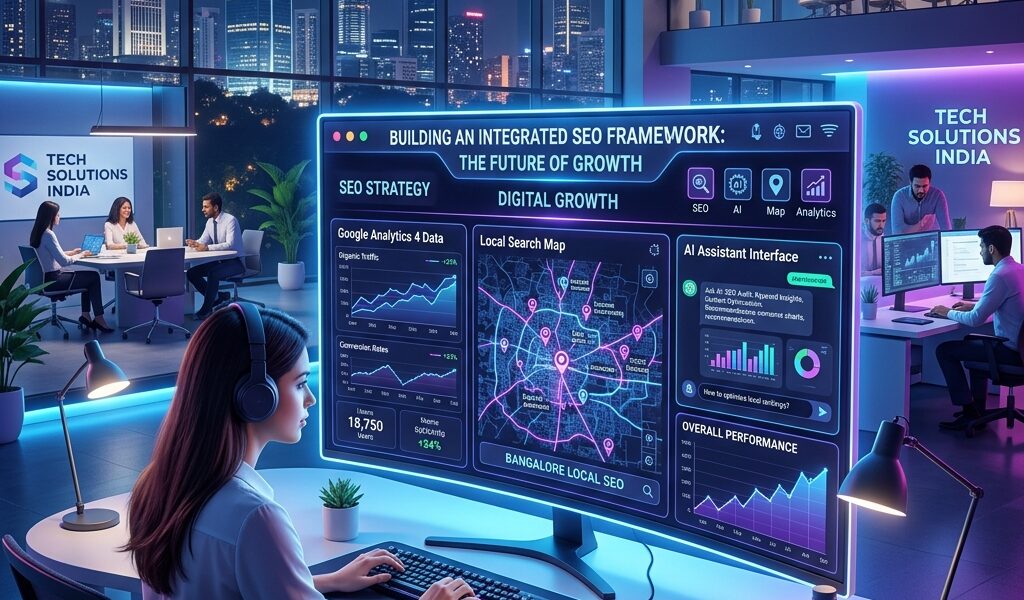
A strong strategy now combines Traditional SEO, Local Search Optimisation, and Answer Engine Optimisation. Together, they help businesses stay visible whether people search on Google, check Maps, or ask AI tools for answers.
This article explains each part in simple terms. It also shows how all the parts connect with each other. In the end, you will understand how to build this system for your own business step by step.
Table of Contents
Why a Single-Channel SEO Strategy No Longer Works in 2026:
Search has changed a lot these days. People now get answers from Google AI Overviews, Map results, ChatGPT, Perplexity, and voice assistants, often without opening a website. Because of this, Answer Engine Optimization (AEO) is no longer optional or niche. It is becoming one of the fastest-growing areas in search, where visibility depends on being directly picked as the answer.
For Bangalore businesses, this change is even stronger. India has one of the highest voice search usage rates, and Bangalore users quickly adopted AI tools and conversational search. Today, a startup in Koramangala looking for best B2B SaaS marketing agencies in Bangalore is more likely to ask ChatGPT or Perplexity than scroll through traditional Google results.
The data clearly shows a big shift. A large share of Google searches today end as zero-click searches, where people get the answer directly on the results page without visiting any website.
This means even if you rank #1, it is not enough anymore. If your audience is using AI Overviews, your content must be written in a way that it gets picked and cited as the answer, not just shown in search results.
The Three Pillars of an Integrated SEO Framework:
An integrated SEO framework is not a checklist. It works like a system where three different parts support each other. Each part helps you reach a type of search that the others alone cannot cover.
Pillar 1: Traditional SEO — The Authority Foundation:
Traditional SEO builds the base trust your whole system depends on. AI tools like Gemini, ChatGPT, and Perplexity usually pick answers from websites that already have strong authority and credibility. If your site is weak, with thin content, poor technical setup, or low-quality backlinks, AI systems will simply skip it, even if your AEO is done well.
In 2026, Traditional SEO mainly depends on two things: strong E-E-A-T content and a clean technical setup. E-E-A-T means showing real experience and clear expertise in your field. This is something AI content cannot truly match, and Google still values it highly through its quality systems. Long, detailed guides, original insights, case studies, and real experience-based writing help build real trust. This kind of content builds authority, and that is what increases your chances of getting picked and cited by AI systems.
On the technical side, things have moved forward. Basic Core Web Vitals are now standard, so the real focus is on INP (Interaction to Next Paint) and a clean, well-planned site structure. At the same time, Digital PR is still very important. Getting backlinks from trusted Indian platforms like YourStory, Economic Times, and industry-specific publications helps build strong authority. These signals matter for both Google and AI systems that read and rank your content.
Pillar 2: Local Search Optimisation (LSEO) — The Proximity Engine:
Local Search Optimisation (LSEO) connects your online presence with people nearby who are ready to buy. For any Bangalore business with a store, service area, or local offer, it decides whether you show up in the Map Pack. This top three listing gets most of the high-intent local clicks and drives real customers to your business.
In 2026, Local SEO is no longer just about matching keywords. Google now sees your business as a real entity connected to a place, a category, and a reputation.
To improve this, your Google Business Profile should be fully updated with real details like geotagged photos, clear local service descriptions, and correct listings across local sites. This helps Google trust your business and connect it properly with your area and services.
Review quality matters more than just star ratings. AI systems and Google now pay close attention to what people actually write in reviews, especially when they mention services and locations. A detailed review like “great UI/UX audit for our Indiranagar e-commerce brand” helps your local authority much more than a simple five-star rating with no comment.
Pillar 3: Answer Engine Optimisation (AEO) — The AI Visibility Layer:
Answer Engine Optimisation (AEO) means writing and structuring your content in a way that AI tools, not just Google, can easily understand, trust, and use in their answers. It is a new and important part of SEO, and most Bangalore businesses have not started focusing on it yet.
AEO is built on two main things: structured data and how your content is written. Structured data, like JSON-LD Schema, helps AI and Google clearly understand your page. Schemas such as FAQSchema, LocalBusinessSchema, and ArticleSchema tell search engines exactly what your content means. Without this, AI has to guess the context. With it, everything is clearly defined and easier to pick up for answers.
Conversational content architecture means writing your content in a simple question-and-answer style, where each answer starts directly with the main point. Instead of a general line like “Our SEO services help businesses improve their digital presence,” you write it as a clear question and answer, such as “What does an SEO agency do for a Bangalore startup? It audits the website, finds ranking opportunities, and builds a content and backlink strategy to grow organic traffic.” This format is easier to read, clearer for users, and more likely to be used by AI and search engines as a direct answer.
How to Build an Integrated SEO Framework — Step by Step:
Step 1: Conduct an Entity Audit:
Before you create content, first list the key entities your brand should connect with. This includes your locations like Bangalore, Koramangala, and Electronic City, your services like SEO, digital marketing, and Google Ads, and your focus areas like e-commerce SEO, B2B lead generation, and local search. This simple list becomes the base for your content plan and Schema setup.
Step 2: Synchronise Content Across All Three Pillars:
Take one strong topic and use it across all three areas. For example, a detailed guide on “how to improve local search rankings in Bangalore” works as your main SEO content. Then you can turn it into local updates and posts for your Google Business Profile based on specific neighbourhoods, which helps with local reach. After that, break the same content into 8–10 simple question-and-answer points and use them with FAQ schema for AEO. One good piece of content, used in three different ways, gives you much more visibility and stronger results.
A Bangalore real estate developer took one strong topic about buying apartments in Sarjapur Road and used it in different ways. It became a Google Business Profile post, a few FAQ answers on the website, and a detailed guide blog. In just four months, this single content started bringing results from the Map Pack, website traffic, and even AI search results. One idea turned into three strong sources of customer reach.
Step 3: Optimise Every Service Page for Natural Language:
Go through each service page and ask yourself one simple question: does this page answer what a real person would ask an AI assistant, or does it sound like a brochure? If it feels like a brochure, change it. Rewrite the opening of each section in a clear question and answer format. This small change makes your content easier to understand and improves its chances of appearing in Featured Snippets and AI results at the same time.
Step 4: Implement Full-Stack Schema Markup:
For most Bangalore SMEs and startups, it’s best to start with three key Schema types. FAQSchema helps your pages show up in Featured Snippets and AI answers by clearly structuring common questions. LocalBusinessSchema strengthens your business details on your contact and about pages, helping Google understand your location and services better. ArticleSchema makes your blog content easier for search engines and AI tools to read, understand, and cite correctly.
Step 5: Begin Tracking Share of Model:
In 2026, just tracking rankings is not enough anymore. You also need to check something new—how often AI tools mention your brand when people ask for recommendations in your category. You can test this by asking ChatGPT, Perplexity, and Google AI Overviews the same questions your customers usually ask. Then see if your brand shows up in the answers. This “Share of Model” tells you how visible your business is in AI search, and it becomes a key guide for your SEO and growth strategy.
Common Mistakes Businesses Make When Building an SEO Strategy in 2026:
Mistake 1: Treating AEO as Separate from Traditional SEO
AEO does not replace Traditional SEO, it builds on it. AI tools and search engines still prefer websites that already have strong authority, good content, and quality backlinks. If a business focuses only on AEO without building this base first, it will not get cited, even with perfect Schema. First build trust and authority, then work on AEO to improve visibility.
Mistake 2: Neglecting Google Business Profile Consistency
For LSEO, your Google Business Profile (GBP) is one of the strongest tools to improve rankings. But many Bangalore businesses make a simple mistake—they keep different Name, Address, and Phone details on their website, GBP, and other listings. This creates confusion for Google. Before doing anything else in local SEO, make sure all your business details are exactly the same everywhere.
Mistake 3: Writing for Keywords Instead of Questions
Most Indian business websites still sound like brochures. They focus more on keywords than on real, natural questions people ask. In 2026, this kind of content often gets ignored by AI systems. To fix this, every important service page should include at least one clear question and answer that directly matches what a user would ask. This makes it easier for AI to pick up and show your content as a direct answer.
Mistake 4: Ignoring Zero-Click Search as a Brand Opportunity
Many businesses think zero-click searches mean lost traffic, but that’s not the full picture. When your brand shows up in an AI Overview or Map Pack, it is still a strong impression at the exact moment someone is ready to buy. Even if they don’t click, they still see your name linked to their needs. So the real goal is to increase how often your brand gets cited, not just how many clicks you get.
Mistake 5: Running Three Strategies in Silos
This framework works only when Traditional SEO, LSEO, and AEO are planned together. The same keywords, the same business details, and the same content should be used across all three. When teams treat them as separate tasks, they miss the combined benefit that makes this approach much stronger and more effective than doing each part on its own.
Best Tools for Building an Integrated SEO Framework:
- Google Search Console is still very important because it shows the real data from Google. It tells you exactly what pages are indexed and how your website is performing in search results.
- Google Business Profile Insights helps you understand how people find your business locally. It shows how often your profile appears in search and on Google Maps, and what actions people take like calling you, asking for directions, or visiting your website. These are real local SEO signals that normal rank tracking tools often miss.
- Schema Markup Validator (validator.schema.org) helps you check your JSON-LD before you publish it. It makes sure your structured data is clean, correct, and easy for search engines and AI systems to understand. This step helps avoid errors and ensures your content is properly read, which improves your chances of better visibility and strong search performance.
- Perplexity and ChatGPT can be used as simple tools to test your AEO. Ask them the same questions your customers usually ask, then check which websites they use as sources. If your brand is not showing up, that gap tells you exactly what content you need to create or improve.
- Screaming Frog helps you find technical problems on your website like missing canonical tags, orphan pages, and broken Schema. These issues can hurt your SEO, local SEO, and AEO all at the same time, so fixing them is important for overall performance.
How Riyo Advertising Helps Bangalore Businesses Build an Integrated SEO Framework:
Most Bangalore startups and SMEs don’t struggle with understanding this system. The real problem is execution. Handling Traditional SEO, LSEO, and AEO together is not easy without a dedicated team. Each one needs different skills, different types of content, and different ways to track results. Because of this, many businesses find it hard to manage everything at once and the work often slows down.
Riyo Advertising’s digital marketing services are built to handle this full system in one place. Instead of working with separate SEO teams, Google Business Profile experts, and content writers, clients get one team that manages everything together under a single strategy. The work starts with a full audit of your content and business entity, then moves to technical fixes and Schema setup, and continues with regular tracking of both search rankings and AI visibility.
Riyo Advertising works with many competitive businesses in Bangalore, including SaaS companies, real estate developers, e-commerce brands, and professional service firms. The integrated SEO approach is not the same for everyone — it is adjusted based on the business type, location focus, and stage of growth. For example, a small 12-person startup in HSR Layout will need a very different strategy compared to a retail brand with multiple branches across the city.
Clients who follow the full integrated framework usually see steady, combined growth across all channels. Their organic traffic improves, their Map Pack visibility increases, and they start appearing in AI Overview results as well. Instead of one area growing at the cost of another, everything moves up together through coordinated work. In most cases, clear visibility starts building within the first six months.
When you are ready to move from planning to action, you can simply reach out and start the conversation with the team.
Talk to the Riyo Advertising Team — We'll Help You Get Started:
An integrated SEO framework may look simple on paper, but applying it to a real business is not easy. Every website has its own history, competition, and content gaps. Turning the strategy into real results needs both technical skill and clear planning. This is where many teams struggle when they try to do it alone.
You can contact Jyostna or Dinesh at Riyo Advertising for a simple review of your current SEO setup. They will clearly explain what is working, what is missing across SEO, local search, and AEO, and where you should start for the best results. The first conversation is simple and does not require any long commitment.
- Call or WhatsApp us at: +91 98219 84000, +91 96996 06000, +91 86571 12011
- Visit our Website: Riyo Advertising official website
- Ask for Jyostna or Dinesh.
Whether you are calling for the first time or coming back again, you will always speak to someone who understands the subject properly, not someone reading from a script.
Frequently Asked Questions About the Integrated SEO Framework:
Traditional SEO helps your website rank as a normal search result link on Google. Answer Engine Optimization (AEO) helps your content get picked and used as a direct answer by AI tools like Google AI Overviews, ChatGPT, and Perplexity. Both are important, and AEO does not work well without strong SEO authority behind it.
More than ever, AI tools rely on trusted and high-authority websites to build their answers. If your site doesn’t have a strong SEO base—good content, solid authority, and clean technical setup—it simply won’t be picked as a source. Even perfect Schema alone cannot fix that gap.
Bangalore has one of the most active digital user bases in India. People here regularly use voice search, AI tools, and Google Maps for local searches. An integrated SEO framework helps your brand stay visible across all these platforms—Google search results, Map Pack listings, and AI answers—so you don’t depend on just one channel for visibility and leads.
A zero-click search happens when someone gets their answer directly on Google, without opening any website. This can be through an AI Overview, a Featured Snippet, or the Map Pack. It matters because your brand still gets seen at the exact moment the user is ready to decide. So instead of focusing only on clicks, it is important to focus on how often your brand appears in these results, because that builds trust and visibility over time.
Track three key signals in a simple way. First, look at your website traffic and keyword rankings for Traditional SEO. Second, check your Google Business Profile for Map Pack visibility and actions like calls or direction requests for LSEO. Third, see if your brand is being mentioned in AI answers on tools like Google AI, ChatGPT, and Perplexity for AEO. If all three are improving together, your SEO system is working well.
Yes, and it makes a real difference. Keyword SEO focuses on exact search terms people type. Entity-based SEO goes deeper and helps Google understand your business as a real thing, linked to a place, service type, expertise, and reputation. When this is strong, your visibility improves across many related searches, not just the exact keywords you are targeting.
Conclusion:
In 2026, the businesses that win in Bangalore search will not be the ones ranking for the most keywords. They will be the ones visible everywhere their customers search—Google results, Map Pack, and AI answers at the same time. This is exactly what an integrated SEO framework helps you achieve: full visibility across all search channels.
Start by checking where your brand shows up across all three areas—SEO, local search, and AI results. Take your five most important customer questions and search them on Google AI Overviews, Perplexity, and Google Maps. See where you are missing. Then fix it step by step: first build strong content and authority, then improve your business details and signals, and finally structure your content for AI visibility.
Your competitors who understand this change are already taking action. Riyo Advertising helps you build a strong integrated SEO system so every piece of content, every campaign, and every customer interaction works together across SEO, local search, and AI results at the same time.

You Might Also Like