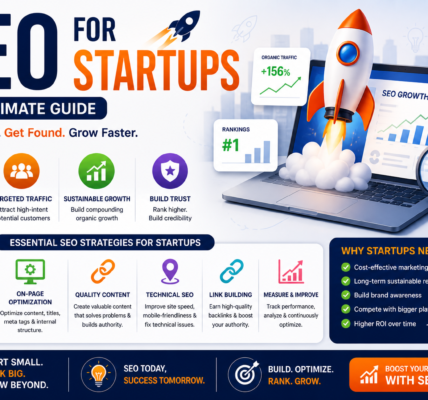

How AI Search and GEO Are Rewriting the Rules for Bangalore E-Commerce Brands in 2026
This is not a future trend. It is already happening in 2026. Many Bangalore-based e-commerce brands are seeing this shift across categories.
The problem is simple. Most brands are not ready for it.
Generative Engine Optimisation (GEO) now decides if your brand appears in AI-generated answers. This blog explains what has changed, why it matters for Bangalore's D2C brands, and what you should do next.
Table of Contents
- Why AI-Driven Search Is the Biggest Shift Since Mobile — And It's Already Here
- What Generative Engine Optimization Actually Means — And Why It Differs From SEO
- How to Optimize Your Bangalore E-Commerce Store for AI Search in 2026
- Common Mistakes Bangalore E-Commerce Brands Make With AI Search Optimization
- Best Tools for GEO and AI Search Optimization You Can Use Today
- How Riyo Advertising Helps Bangalore Businesses with AI Search and GEO
- Talk to the Riyo Advertising Team — We'll Help You Get Started
- Frequently Asked Questions About Generative Engine Optimization
Why AI-Driven Search Is the Biggest Shift Since Mobile — And It's Already Here
Search Generative Experience (SGE) is no longer in testing. It is now part of live search results. For many product queries, Google's AI appears at the top of the page. It pulls data from different sources and suggests products before users even scroll.
This change is critical for Bangalore brands. The city has a strong D2C market. It includes fashion, health, food tech, and home products. Competition is already high.
Take a skincare brand in Koramangala. It may target keywords like "natural face serum." But now, it competes with AI-generated answers. These answers often highlight a few selected brands first.
Here is an important insight. Brands with strong mentions outside their website show up more often in AI results. These mentions can come from platforms like YourStory, The Better India, or popular Bangalore lifestyle blogs.
In contrast, brands with perfect websites but no third-party presence are often ignored by AI summaries.
Check where your brand is mentioned online. Look at trusted Indian publications and local Bangalore blogs. If your brand is missing, that is your first GEO gap. Fix it early.
What Generative Engine Optimization Actually Means — And Why It Differs From SEO
Generative Engine Optimization (GEO) means making your content easy for AI tools to read and use. These tools include Google Gemini, ChatGPT, and Claude. The goal is simple: you want these models to mention your brand when they generate answers. You do not want them to skip over you or summarise your content without credit.
Traditional SEO helps you rank on search engine results pages. GEO goes a step further. It helps you become part of the answer itself.
The Three Pillars of GEO
- Structured data fluency. AI models do not browse websites like humans. They rely on clear signals. Schema markup, especially JSON-LD, helps provide these signals. It tells AI about your product's price, stock status, ratings, shipping time, and return policy. Without this data, AI may guess the details or ignore your product.
- Authoritative off-site presence. AI tools look at what others say about your brand. Mentions on trusted blogs, media sites, or even forums like Reddit build trust. This is similar to E-E-A-T but focused on AI-driven search. The more credible your mentions, the better your chances of being cited.
- Conversational content architecture. Search behaviour has changed. People now ask full questions instead of typing short keywords. For example, users may ask about earphones that work well in noisy metro rides and have long battery life. Your content should answer these detailed queries clearly.
For instance, a furniture brand in Whitefield should create a guide like "Best office chairs for long work-from-home hours in Bangalore's humid climate." This works better than only listing product features.
Pick your top three product categories. Check if your content answers real customer questions. If not, create one focused piece for each category.
How to Optimize Your Bangalore E-Commerce Store for AI Search in 2026
Here are simple steps you can start using today.
Step 1: Implement Full Product Schema Markup
Add JSON-LD schema to every product page. Include product details, ratings, price, availability, shipping details, and return policy. Use Google's Rich Results Test to check your pages. Many Shopify and WooCommerce themes miss shipping and return data. Fixing this is important for location-based queries.
Step 2: Add a "Key Takeaways" Block to Every Product Description
Start each product page with 3–4 short bullet points. Keep each line under 15 words. This helps AI quickly understand your product.
Step 3: Build FAQ Sections That Mirror Real Search Queries
Write questions in a natural tone. For example: Instead of "What is the return policy?" Write "Can I return this within 30 days if it doesn't fit my Bangalore address?"
Step 4: Incorporate User-Generated Content Strategically
Use real customer photos and videos. Ask customers to share how they use the product. Local details add value. For example, mentioning a commute to Manyata Tech Park makes the review more useful.
Step 5: Build Local Context Into Your Content
Mention areas like HSR Layout, Koramangala, and Whitefield where relevant. Phrases like "same-day delivery in HSR Layout" help AI understand your service area.
Review your top five product pages using Google's Rich Results Test. Fix schema issues first. Then improve your content for clarity and depth.
Common Mistakes Bangalore E-Commerce Brands Make With AI Search Optimization
Mistake 1: Treating GEO as a Future Problem
Many D2C founders in Bangalore know that AI search is changing fast. Still, they wait for things to settle before they act. This delay can hurt growth. AI systems prefer brands with a strong content history. If you start in 2027, others will already be ahead.
Fix: Start now with small steps. Add schema markup. Include FAQ sections. You do not need to rebuild your full website. Just improve what you already have.
Mistake 2: Using AI-Generated Content Without Human Editorial Review
Many brands publish AI-written content without checking it. This often leads to poor results. Search engines can spot low-quality AI content. Such content lacks real examples, trust, and clarity.
Fix: Use AI as a tool, not a replacement. Always review the content. Add one real example or verified detail before publishing. This builds trust and improves quality.
Mistake 3: Neglecting Off-Site Authority Signals
Some startups only focus on their own websites. They ignore mentions on other platforms. This limits their reach. Even a well-optimized site needs outside validation.
Fix: Get your brand mentioned on trusted platforms. Try YourStory, Inc42, or local blogs. You can also engage on forums like r/bangalore. Aim for a few quality mentions every quarter. This builds long-term credibility.
Mistake 4: Ignoring Image Optimization
Visual search is growing fast. Many users search with images. For example, they may search for a product they saw on 100 Feet Road. If your images are unclear or poorly labeled, your products may not appear.
Fix: Improve your image alt text. Describe the product clearly. Include material, use, and style. Avoid using only file names or SKUs.
Mistake 5: Writing for Keywords Instead of Questions
Old SEO methods focused on keyword stuffing. This no longer works well. AI search looks for clear answers to real questions.
Fix: Turn your headings into questions. Think about what your customers ask. Answer those questions in simple words at the start of the page.
Do not try to fix everything at once. Pick one mistake that fits your brand. Work on it this week and build from there.
Best Tools for GEO and AI Search Optimization You Can Use Today
Google Search Console remains the foundational tool. In 2026, pay close attention to the "Search type" filter — look specifically at how your pages perform for voice and image searches, not just text. If those numbers are low, your content isn't structured conversationally enough.
Google's Rich Results Test (search.google.com/test/rich-results) — run every product page template through this before and after schema changes. It tells you exactly which structured data is readable and which fields are missing.
PageSpeed Insights (pagespeed.web.dev) — AI search engines factor Core Web Vitals into their trust signals. A slow product page is a liability not just for traditional rankings but for GEO citation worthiness.
Screaming Frog — use the free version to crawl your site and identify pages with missing or duplicate meta descriptions, thin content, and broken schema. This is your technical audit starting point.
Google Business Profile (GBP) Insights — for Bangalore brands with a physical presence or local delivery operations, GBP remains a direct input into AI local search responses. Keep your profile updated with accurate hours, photos, and customer Q&A responses.

How Advertising Helps Bangalore Businesses with AI Search and GEO
Most Bangalore startups and SMEs understand that something has shifted in search — but translating that awareness into a concrete content and technical strategy is where execution stalls. There's no in-house SEO team, no bandwidth to manage schema audits alongside product development, and no clear framework for building the kind of off-site authority that GEO requires.
Riyo Advertising works with e-commerce brands, D2C founders, and Bangalore-based businesses to build GEO-ready digital presences from the ground up. That means technical SEO audits that cover schema implementation and Core Web Vitals, content strategy built around conversational search intent, and structured approaches to earning the third-party mentions that AI engines use as trust signals.
The process is straightforward: the team begins with a site and brand audit, identifies the specific GEO gaps — whether technical, content-based, or off-site — and builds a prioritized action plan. Because Riyo handles strategy, execution, and reporting under one roof, clients don't need to coordinate between an SEO agency, a content team, and a PR vendor separately.
Businesses in Indiranagar, HSR Layout, and Whitefield that have worked with Riyo on local SEO and content strategy have seen meaningful AI search visibility improvements within three to five months of consistent, structured work — not overnight, but on a predictable timeline.
If you'd like to know what this looks like specifically for your store or brand, the team is straightforward to reach.
Talk to the Riyo Advertising Team — We'll Help You Get Started
Reading a framework like this is helpful. But applying it to a real Shopify store, a WooCommerce catalogue with 400 SKUs, or a fast-growing Bangalore D2C brand is a different task. It comes with real challenges. Every business has its own setup, competitors, and goals. What works for one may not work for another.
That's where Riyo Advertising steps in. We help turn ideas into action. We don't just explain what GEO requires—we help you apply it in a way that fits your business.
When you reach out to us, Jyostna or Dinesh will connect with you directly. They will take the time to understand your current setup. They will ask clear and relevant questions. This helps them see what's working and what needs attention.
You'll get honest feedback. No jargon. No confusion. Just a clear starting point based on your needs.
Whether you run a small online store or manage a large product catalogue, we guide you step by step. Even if you are still exploring your options, we are happy to help.
Our goal is simple. We want to make GEO practical and easy for you to act on.
You don't have to figure everything out on your own. Just start the conversation.
Frequently Asked Questions About Generative Engine Optimization
Generative Engine Optimization, or GEO, is the process of shaping your content so AI search tools can easily read and use it. These tools include platforms like Google Gemini. GEO focuses on clear structure, proper schema markup, and a strong brand presence. The goal is simple: get your business mentioned in AI-generated answers. It builds on SEO but shifts the focus from keyword ranking to AI understanding.
AI search may lower traffic from basic information searches. These are users who want quick answers and may not click on a website. However, it can improve results for buying-related searches. When your brand appears in an AI summary, users are more likely to trust and choose you. So, traffic may drop slightly, but the quality of visitors improves.
Yes, it still matters a lot. Fast-loading pages, clean site structure, and strong backlinks remain essential. GEO does not replace SEO. It builds on it. If you ignore SEO basics, your GEO efforts will also fail. Both must work together.
Schema markup gives clear information to AI systems. It tells them what your product is, its price, delivery details, and customer reviews. This removes guesswork. As a result, AI tools can use your data more confidently. Well-structured schema often increases your chances of being featured in AI answers.
Yes, and this is a key advantage of GEO. AI tools value expertise. If your brand focuses on a niche, you can stand out. For example, being the best source for "sustainable cotton kurtas for Bangalore weather" can help you rank above bigger but less focused brands.
GEO takes time. Most brands start seeing results in three to six months. Progress depends on consistent work across content, schema, and authority building. Over time, results improve faster due to compounding effects.