- Homepage
- Times of India
- What Is Hotel Branding? A Complete Guide to Advertising, Identity & Growth Strategies for 2026
What Is Hotel Branding? A Complete Guide to Advertising, Identity & Growth Strategies for 2026
 Sahil Singh
Posted on
Sahil Singh
Posted on
Hospitality Branding | Updated for 2026
With a magnificent lobby and a lack of identity, a hotel is simply furniture with a check-in desk. The properties that win in 2026 aren't competing against each other for the number of threads or buffets—they're competing for meaning. Now it's not just where they are staying but who they are staying as that is what they are choosing for a couple of days.
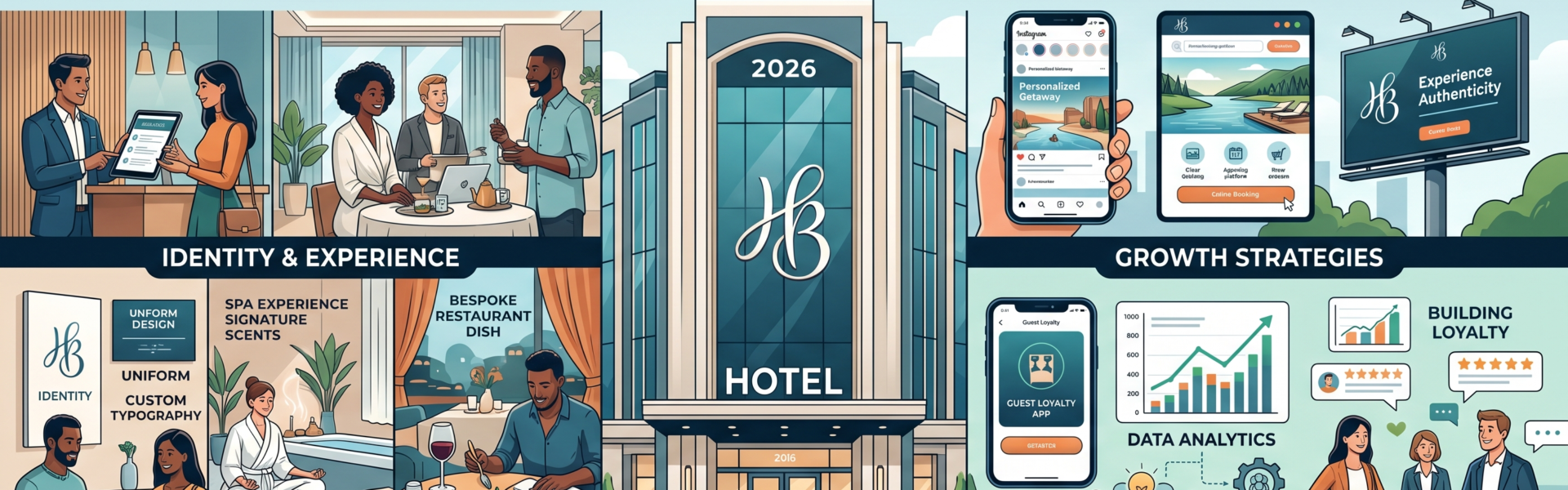
Hotel branding in 2026 is more of a strategy that involves building an identity that is enough to make the right person notice you, book directly and return.
This guide dissects everything about the layers in today's hospitality branding: sensory design, AI backdrop advertising, sustainability integration and a merciless direct booking marketing approach. At the end of this guide, you'll have a brand built that resonates with the target market, differentiates against Online Travel Agencies (OTAs) and will never have to justify premium pricing.
Why Hotel Branding Has Never Been More Urgent Than in 2026
The hospitality landscape has shifted dramatically. If your hotel does not have a recognizable brand, it is vulnerable to three massive industry threats.
1. The OTA Dependency Trap
OTA issues are becoming more and more structural. Platforms like Booking.com, Expedia and MakeMyTrip now have 60-70% of the discovery share in India for independent hotels.
The cost: Each of these websites takes 15–25% of properties' commissions for each booking.
Lost profit is not the lost data! The guest relationship is not yours, it is that of the OTA.
The only way to put up effective structural barriers against this dependency is a strong brand that brings in direct bookings. If visitors enter your name instead of “hotels near me”, you're taking your profits with you.
2. The Rise of the Conscious Traveler
Expectations of the hotel guest experience have changed. The "conscious traveler" is the fastest growing segment of Indian leisure travel. These visitors seek to find out a brand's ethos, sustainability commitment and its local authenticity before booking a stay.
The Data: Recent surveys across the industry showed that more than 70% of travellers globally say they will look to take sustainable travel decisions in 2026. This is being fuelled by urban millennials and Gen Z travellers, particularly in the premium and boutique end of the market. This group will seek out alternative brands if they can't articulate the brand's values.
3. The Airbnb Effect & Experiential Hospitality
The benefit that hotels had over the short-term rental market has been eliminated by sites such as Airbnb. There are a number of properties that offer flexible, spacious and highly localized lodging that guests can easily find.
What Airbnb can't easily replicate is a well-thought-out hospitality branding experience. Hotels have to play the game of curated consistency: signature hallway scent, curation of the local art gallery in the lobby, welcomeness of the staff ceremony, etc.—all the things that are uniquely yours, and reproducible.
💡 Actionable Takeaway for Hoteliers: The Brand Sincerity Audit
Stop reading and review every guest touchpoint your hotel (or chain) currently possesses. Look at your:
- Website & Booking Engine
- Instagram & Social Media Feeds
- Lobby Design & Sensory Ambience
- Staff Language & Greeting Protocols
- Check-out & Departure Messages
Ask yourself: How many of the following elements have been deliberately included to convey your identity and how many were simply left over from a renovation that took place 10 years ago? All touch points need to be a part of the same story in 2026.
What Hotel Branding Actually Means in 2026
One thing you will find in hospitality is that many people think that branding is just about your logo, colors and signage. What is really involved in hotel branding in 2026, is the sum of all the “vows” your property makes – whether you are aware or not – to each person who comes in contact with it. These pledges begin when the guest first searches for something at midnight on Google and continue long after he returns the room key.
There's no straightforward sequence to modern hotel marketing strategies; they accumulate over time. A brand needs to develop three fundamental elements to maintain its competitiveness. Even if you are unable to invest in one of these pillars in 2026, your hospitality branding will fail to stand the test of time.
Pillar 1: The Digital Identity (The Narrative Promise)
Your digital footprint is the first space that a guest has to navigate before they enter your lobby. Your digital identity is your most valuable asset in 2026 in order to engage in a direct booking strategy. It's not just the Website: It's how you respond to a negative review, how genuine your Instagram Reels are, and how your AI chatbot sounds.
The Vow: If you see it on your screen, it's what you will encounter at our front desk. The brand promise is broken before the guest arrives if the digital narrative is "corporate" and the hotel is "boutique".
Pillar 2: The Sensory & Service Identity (The Tangible Promise)
This is the core of the hotel guests' experience. After the guest arrives your brand needs to shift from a virtual to a real experience. Sensory branding, also known as "Service Design", is where it comes in.
Signature elements: This is your signature lobby scent, the actual weight of your linens and the "Micro-Moments" of service (such as name-calling or getting the name of a returning guest).
The Vow: This pillar states: "You are in a space designed particularly for you to be comfortable and to experience aesthetic."
Pillar 3: The Relational & Value Identity (The Persistent Promise)
At the hotels in 2026, guests do not simply stay, they 'align' with them. This pillar is all about your brand's purpose, outside of the bottom line. This is the most important aspect of the "Conscious Traveller".
Values in Action: This encompasses your sustainability efforts, your local community engagement and your ability to use data to tailor stays while not being intrusive.
The Vow: The promise given is: Your presence with us adds to a bigger positive impact and we value your presence more than any one transaction.
💡 Strategy Insight: The "Compound Branding" Effect
Successful hotel marketing strategies in 2026 treat these pillars as a cycle:
- The Digital Identity earns the trust required for a direct booking.
- The Sensory Identity delivers on that trust during the stay.
- The Relational Identity converts that stay into long-term advocacy.
If these three are all aligned, then you are no longer selling "room nights", you are selling a hospitality brand that guests feel they have a personal interest in protecting and promoting.
How to Build and Advertise a Hotel Brand That Grows in 2026
Step 1 — Establish Brand Foundations Before You Spend on Advertising
Noise is costly advertising in which there is no clarity of the brand. Prior to launching a single Meta or Google campaign, write down your brand rules: mission and vision, tone of voice, logo usage, color scheme, photography style and three Brand Rituals that will be provided by your team on a regular basis. This document will be brief to all the creative, all the campaigns, all the content and all new hires.
Step 2 — Design Physical Spaces for Social Discovery
In 2026, social visibility is the primary digitization of marketing of hotel products, and the physical environment is the main starting point of social visibility. Create a single hero moment in your premises that guests are inclined to take photos and hashtag such as a mural, a rooftop installation during golden hour, an unusually designed corner of breakfast. A boutique property in Mysuru made more than 18 lakh in attributable direct bookings in a quarter by creating one Instagrammable corner of the interiors and training employees to ask customers to tag the hotel. This was one design intervention at a cost; and the pay back was organic and continuous.
Step 3 — Use AI-Powered Targeting to Reach Guests Before They Search
The use of AI in hotel branding has stepped out of the new into the normal. The Advantage+ by Meta and the Performance Max by Google can now enable hotel advertisers to target likely bookers with predictive intent data - travel search history, flight booking behavior, seasonal data, etc - prior to them opening any OTA application. This targeting accuracy when combined with first-party CRM data on former guests will be a compounded competitive advantage, increasing in value with length of use.
Step 4 — Choose Community Influencers Over Celebrity Reach
Vanity metrics are no longer the be all and end all of influencer marketing in the hospitality industry. The best-ROI partnerships are the ones by the creators of the community pillar in 2026, a travel journalist that has 40,000 deep-engaging followers who focuses on South India heritage tourism will be of great value to a Chettinad property, compared to a Bollywood star that has 4 million generic ones. Identify your audience with that of the creator, not with the number of followers of the creator with your ego.
Step 5 — Build Direct Booking Systems Backed by Brand Value
All OTA bookings are lost CRM opportunities. The development of a luxury hotel in 2026 is based on the idea of converting the guests that the OTA will have procured into the direct bookers in case of a second visit to the hotel. This involves a frictionless direct booking site, a confident value package (room upgrade, early/late check-in, a locally tailored experience) and a post-stay email series that transports them into your loyalty program - not a points balance. They come back because of the brand; it is the stimulus, the incentive.
Actionable takeaway: Select the top three OTA source markets, and create a special direct-booking incentive in each of the segments - and conduct an A/B test in 60 days to quantify the lift in conversion.
Hotel Branding Mistakes That Are Quietly Killing Your Growth
-
Mistake 1: Treating Branding as a One-Time Project
Most operators invest into a rebrand at the launch or upon a renovation and then think that the job is done. Brand identity: brand audits should be conducted quarterly, read your reviews and social tags by your guests and contrast how your guests are describing your property versus how you want it to be experienced. On average, a digital refresh needs to occur every two to three years.
-
Mistake 2: Greenwashing Instead of Genuine Integration
Sustainable hospitality branding is the most scrutinized category in 2026. Tourists who reserve high-end and luxury hotels will juxtapose sustainability statements with the real functioning. A hotel with a plastic-free badge, which serves water in cups made of plastic, will have social corrections in a very public and conspicuous manner. Make it part of operations: then tell people about it with details: QR codes to supplier sourcing, energy audit findings, number of people hired in the community.
-
Mistake 3: Neglecting Verbal Identity Entirely
Tone of voice is wholly omitted in most brands of hotels that invest in the design and photography. When your web content has world-class amenities and unparalleled comfort, you can pass unnoticed. The most economical, quickest brand differentiator to repair is the verbal identity and it compounds through all channels owned instantly.
-
Mistake 4: Treating OTA Reviews as a Brand Strategy
The rating of 4.6 stars in Booking.com is social proof - it facilitates an already made brand choice. When the travelers can only locate you in the OTA sites, then you have a distribution strategy, rather than a brand strategy. Possess your own site, email list and social presence.
-
Mistake 5: Targeting "Everyone Who Travels"
The message, media, and creativity of a business traveler boutique hotel advertising campaign will be entirely different from that of an anniversary couple or wellness tourists. By advertising the same advertisement to the three segments, it is spending money in vain because the audience is also informed that it did not specifically design the brand to meet their needs.
Actionable takeaway: Grab the 50 last reviews that you have done and label each one with the kind of traveler who wrote the review. A number of more than four different and disconnected profiles is an indicator that your marketing -and perhaps, your positioning- is overly general.
🛠️ Best Tools for Hotel Branding and Digital Marketing in 2026
| Tool Name | Core Purpose | Actionable Use Case |
|---|---|---|
| Google Search Console | Baseline Organic Discovery | Filter branded queries (by your hotel name) to see if brand-building is creating awareness. |
| Google Business Profile (GBP) | Local SEO & Direct Booking | Complete optimization yields direct calls/clicks free of OTA commissions. Excellent for local visibility. |
| Meta Business Suite | Audience Listening | Discover who engages with content to fine-tune your brand's visual/verbal tone, not just ad spend. |
| Hotjar / MS Clarity | Booking Funnel UX | Observe how visitors navigate your direct booking site to identify friction points and drop-offs. |
| Canva for Teams / Adobe Express | Visual Consistency | Maintain design standards across social posts and OTA images without needing an in-house design team. |
Quick win you can implement in 24 hours: Log into your Google Business Profile, add five photos taken in the last 90 days and add a 150-word description to 'From the Business' that includes specific positioning of your hotel and your best-selling room type. This one update enhances local search for weeks.
How Riyo Advertising Helps Hospitality Brands Build and Market Their Identity
The majority of hotel owners are highly professional in hospitality- not the architecture of a brand system or even the implementation of a multi-channel advertising program. The problem is not a bandwidth problem, but a specialization problem; to be able to build a cohesive brand identity and at the same time deal with occupancy, operations and staff.
Riyo Advertising works with hotel brands and hospitality brands to fill this void. It begins with a full brand and media audit, the foundation of a successful digital marketing for hotel branding, which assesses the positioning of the brand on the website, OTAs, social media, and in guest communications. The team identifies the mismatch, ambiguity or lack of the identity's performance in the positioning, and develops a tailored media and content approach that fits fully to the guest profile and the property's commercial objectives.
On the advertising front, Riyo is in charge of end-to-end campaign management: Google Ads targeting high-intent travel search queries, Meta campaigns created around the visual and sensory identity of the hotel, and media placements in high-end print and digital spaces to brands in the luxury or corporate travel segments. The benefit of the single-vendor system is that creative, targeting, and reporting remain in line with each other - there is no gap between what the brand speaks and where it shows.
The hospitality brands that we have assisted have registered tangible growth in direct booking ratios and branded search volumes within two to three months of proper brand and advertising efforts, not due to short cuts but due to the implementation of a streamlined, well-timed communication to the correct audience during their booking process.
If you wish to know what this will look like in your particular property, our team is readily accessible and willing to begin with an open conversation of where you are currently.
Talk to the Riyo Advertising Team — We'll Help You Get Started
A guide like this provides you with the structure after reading it. Its application to a real property with its particular location, competitive set, profile of guests and budget requires one who had previously done so to hospitality clients in India.
When you call in, Jyostna or Dinesh on our team will go over with you what is going on with your current situation: what is working, what is missing and what is the highest leverage opportunity in your brand at the moment. No hard pitch, no commitment is involved in that initial dialogue and no commitment is involved that you can act on whether you use us or not.
You are creating a new boutique hotel, re-inventing an old hotel or trying to break the over-reliance on OTAs - each business begins with a one-on-one conversation with individuals who are familiar with Indian hospitality marketing.
Frequently Asked Questions About Hotel Branding 2026
Hotel marketing is the tool-depth and action-filled process of advertising your hotel - the campaigns, the advertisements, the offers. The personality and promise of the property is hotel branding - why guests have chosen you in the first place. The hotel marketing strategies made to a guest involves getting the guest to make a single booking, hospitality branding provides a fan that comes back and recommends others to the Hotel. Branding is a continual zero start point in marketing.
As the short-term rental industry exploded and the OTAs controlled the market, hotels have to provide a distinct, branded experience, which their guests cannot repeat by renting an apartment on Airbnb. Hotel branding 2026 develops the emotional bond that justifies a higher price and takes the direct booking strategy, which no OTA algorithm can establish on your behalf.
Although global chains provide consistency, the advertising of boutique hotels prevails when it is close to the local culture, storytelling, and connection to the community, features that large brands can not do structurally. The most popular demand of high-end travellers in 2026 is that they want to explore a destination, rather than simply stay in it as a hospitality brand.
At least: your mission and vision statements, tone of voice with examples, logo usage guidelines, color palette with hex codes, typography and photography style guidelines, and at least three of your Brand Rituals - specific, deliverable actions that staff can perform to strengthen the hotel guest experience at major guest moments.
Hyper-personalization on such a scale is now possible thanks to AI in hotel branding. A brand can now customize its digital advertisements to target travelers with predictive intent data, customize in-room features (lighting, temperature, content suggestions) to specific guest profiles with in-room technology and now automate post-stay messages that are personal and not template-based. This renders the hospitality brand to be intuitive - as though it knows what the guest desires.
It is a must. Branding sustainable hospitality that revolves around superficial assertions is in itself actively harmful - current-day travelers, especially those in the high-end segment, will notice greenwashing fast and broadcast it to the whole world. The brands need to incorporate sustainability in the operations and report it with specifics which can be verified: the sources of suppliers, energy statistics, community relationships and specific reduction goals.
The rebrand will require complete rebranding every 7-10 years - when the brand will have lost the positioning or target guest of the property. A hospitality brand re-invention: A digital update, change of style of photography and tone of voice should also occur after every 2-3 years to keep in step with technology, design, and changing expectations of guests.
Yes, and in 2026 it frequently is the most salable element. The lighting, the playlist, the dynamism of the lobby, the way the staff communicates - it is these signals of the human senses that guests will talk about when they refer their friends to a property. An intentional, steady energy is definitely a brand, and one that clever hospitality operators create as opposed to chance for a better hotel guest experience.
Measuring four things: your direct booking strategy (what percentage of bookings go direct to you), Brand Search Volume in Google Search Console (how many people are typing your hotel name specifically), Guest Retention Rate (what percentage book again), and your own ability to charge a Brand Premium - to price your property higher than similar competitors and not lose any customers. Combined, these four will give you an indication as to whether you have a working hotel branding plan or not.
Your digital lobby is social media- the place where your brand name is seen most by the greatest number of people before they set foot. By 2026, the content posted by guests will be an important part of a hospitality brand, which will be developed organically. It implies that the hotel guest experience should encompass moments that guests would like to capture and post photos of, but they should not be a gimmick; rather, they should be a natural continuation of an overall well-planned experiential identity.
Closing the Gap: Your 2026 Hotel Branding Roadmap
Whether a property is large or small, or in a hotel segment, three points remain constant: Hotel branding is an investment; specificity trumps breadth every time; and in 2026, guests don't purchase rooms, but purchase a version of themselves.
The most critical thing you can do this week is to bridge the gap between the ‘hotel brand’ you are looking to present and the ‘guest experience’ you're currently providing. Then conduct a Google Business Profile (GBP) audit to optimize your direct booking efforts, review your last 50 Google reviews objectively, and note one “Brand Ritual” your team can reliably perform from tomorrow!
When speed and accuracy are needed, Riyo Advertising's team has a specific expertise in working with hospitality brands who are facing these complex challenges - ranging from a deep brand audit to a high-performance hotel marketing strategy and digital advertisement.
Ready to outshine the competition?
Reach out to Jyostna or Dinesh at +91 98219 84000 or visit Riyo Advertising’s hospitality marketing services to start the conversation.
Your competitors are already investing in their hotel branding plans. The best time to start was two years ago. The second-best time is now.

You Might Also Like