
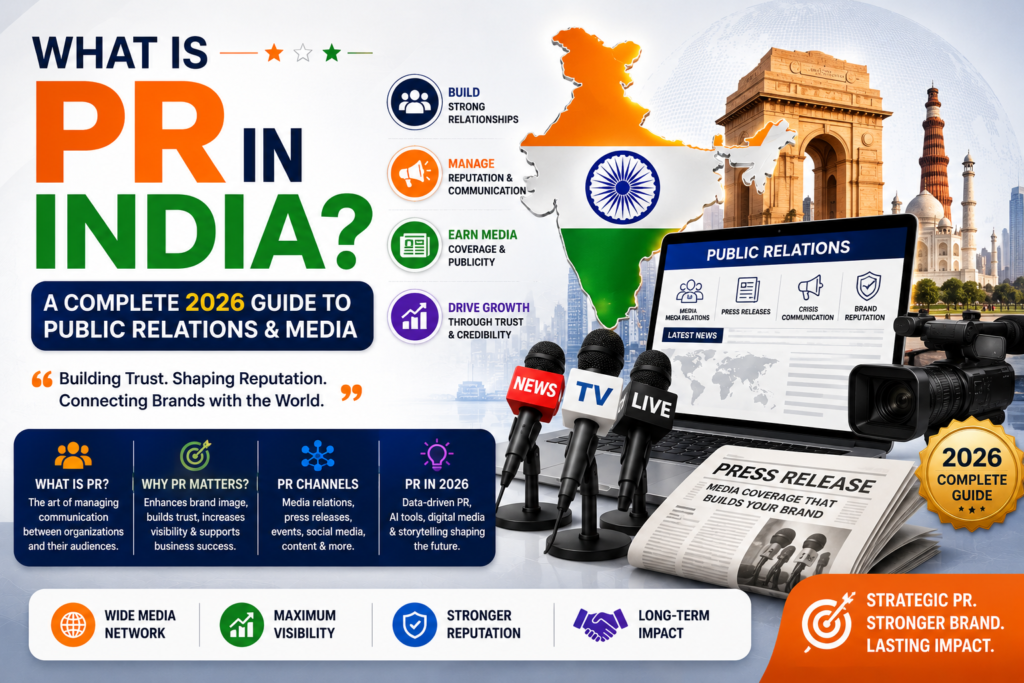
What Is PR in India? A Complete Guide to Public Relations & Media Distribution (2026)
How public relations actually works in India — from full-service agencies to press release distribution. For founders, marketers, and brand managers.
Public relations in India is a massive and fast-growing field. Yet many founders do not understand it. Many people confuse PR with simple press release distribution, , while others think corporate PR is only for large firms with huge marketing budgets — both ideas are wrong.
This guide explains how PR campaigns actually work in India. You will learn how it differs from a simple wire service. We list the top agencies. We also show how early-stage startups and large enterprise companies use strategic media presence to build trust.
What Does PR Mean in India?
PR stands for public relations. It is the practice of managing your brand image. It shapes how the public, media, investors, and the government see your business. In the Indian market, PR activities cover these key tasks:
- Writing and distributing press releases to journalists and media outlets
- Building long-term relationships with journalists, editors, and TV producers
- Managing brand reputation during a crisis
- Securing speaking opportunities, award nominations, and thought leadership placements
- Coordinating with government and regulatory bodies on public communications
- Organising press conferences and media events
- Managing social media presence as part of a broader communications strategy
PR is a long-term strategy, not a one-time tactic. A solid PR campaign builds your brand reputation over many years. It does not just focus on a single product launch.
PR vs Press Release Distribution: The Key Distinction
Many people confuse PR with press release distribution. They are related, but they are not the same thing.
Press Release Distribution is a single action. You write a news announcement and send it to a wire service or directly to reporters. This helps you get media placements for one specific event. Brands use this method for a new product launch, a funding round, or financial results.
Public relations is a much bigger plan — it uses distribution as just one of many tools. A strong PR strategy builds lasting bonds with reporters. It shapes your brand story, manages crises, and keeps your company consistently visible in the media.
In India, many startups use press release distribution as their first step into the media world. This is a smart way to start. However, knowing that distribution is just one part of a larger plan helps you get more value for your money.
The Indian PR Landscape: Key Players
India's PR industry has many moving parts. It includes large agencies, small firms, corporate teams, and online platforms. Here is how the market breaks down.
Full-Service PR Agencies
A full-service PR agency runs your entire media plan from start to finish. They handle your news writing, media pitches, crises, and social media campaigns. The top agencies in India are:
- Adfactors PR: One of India's largest independent firms. They specialise in corporate, financial, and consumer communications.
- Edelman India: The local branch of a global network. They focus on brand reputation and digital media plans.
- Genesis BCW: A leading agency that blends traditional media work with corporate branding.
- Concept PR: A major firm with deep roots in tech, healthcare, and retail campaigns.
- Riyo Advertising and Mass Media Private Limited: A full-service media buying partner with over 20 years of experience. They specialise in placing advertisements and editorial content across national newspapers, television, and airport media.
These large teams usually charge a monthly retainer. They work directly with your internal staff every day.
Press Release Distribution Platforms
A press release distribution service handles the task of putting your news on major websites. While they are not full agencies and do not manage your brand story or pitch reporters directly, they are vital tools for placing your news on major online portals. The top services in India are:
- India PR Distribution: A top choice for small firms and early startups due to its low cost.
- PRIndiaWire: Focuses mostly on tech and digital news.
- NewsVoir: Has strong ties with top-tier Indian media sites.
- Business Wire India: The industry standard for official corporate and financial news.
In-House Communications Teams
Large Indian companies like Tata, Reliance, Infosys, and HDFC Bank use their own in-house communications teams. These internal departments handle day-to-day media tasks and guard the company's image. They often hire outside agencies to help them run big national campaigns.
PRSI: India's PR Industry Body
The Public Relations Society of India (PRSI) is the top professional group for PR workers in India. You can find it online at prsi.org.in. Founded in 1958, it is one of the oldest PR bodies in Asia.
PRSI manages several key tasks for the Indian PR industry:
- Setting clear professional rules and ethical guidelines for Indian PR work
- Running certification programmes to train new PR workers
- Organising the annual National PR Conference
- Publishing deep research papers on new industry data
- Representing the Indian PR field in global media groups
How Indian PR Reaches Newspapers, TV, and Digital Media
If you are new to media relations, you must know how a press release travels to a newsroom.
- National newspapers: Top English papers like The Times of India, Hindustan Times, and Economic Times have busy business desks. They review releases every day. To get coverage, you need a strong story sent through a top press release distribution tool or a direct link to an editor.
- Regional newspapers: Local language papers like Dainik Bhaskar, Lokmat, and Eenadu have massive reader numbers. In fact, their combined readership surpasses that of the English-language press. Firms like Riyo Advertising offer specialised vernacular media campaigns to reach these regional editorial desks.
- Television: Indian TV news channels run 24 hours a day. To get TV spots, your company needs a major event, a live press meet, or a direct line to the assignment desk.
- Digital news portals: Sites like Moneycontrol, YourStory, and Inc42 are great for small companies. They are more open to news from startups. Platforms like PRIndiaWire specialise in reaching these online news editors.
- News aggregators and syndication: Large wire networks like ANI and PTI share news with hundreds of local outlets at once. Getting your story on a major wire service is the fastest path to nationwide coverage.
India PR Distribution: How It Works and Who It Is For
India PR Distribution is a popular online platform for startups and small firms. The service takes your draft, edits it to match news standards, and sends it to many media contacts at the same time.
The site offers simple packages. You can start with basic online posts and scale up to national newspaper ads later. They offer guaranteed online publication on indexed sites. This setup is perfect for brands that want to build strong SEO backlinks.
India PR Distribution works best for:
- Startup funding announcements and capital rounds
- New product launches and store openings
- Corporate partnership news and business deals
- Executive hires and leadership appointments
- Any news that must reach business journalists quickly
How to Write a Press Release That Indian Editors Actually Publish
Getting your press release distributed is only your first step. To get a journalist to print your story, you must write it well. Here is exactly what Indian editors look for:
PR Glossary: 10 Terms Every Indian Brand Should Know
Frequently Asked Questions
India PR refers to the public relations and media distribution services operating in India. This field includes full-service PR agencies, news wires, and media buying firms like Riyo Advertising. Top platforms in this space include India PR Distribution, PRIndiaWire, NewsVoir, and Business Wire India. The main professional group for this industry is PRSI.
No. A press release distribution service is just one tool inside a larger plan. True PR covers many other functions, including managing your public reputation, handling company crises, and building long-term ties with the media.
A full PR agency retainer typically costs between ₹50,000 and ₹5,00,000 (five lakhs) per month, depending on the size of the firm. Basic press release distribution starts at ₹1,999 for online sites. National wire distribution to major news channels can cost over ₹15,000.
PRSI stands for the Public Relations Society of India. It is the official national group for PR professionals in India. Founded in 1958, it sets the ethical rules for the market and runs training programmes for young publicists.
India PR Distribution and PRIndiaWire are the best choices for a new startup. They offer low prices and simple tools. If your business is growing fast and needs deeper editorial credibility, NewsVoir is a stronger choice.
The Bottom Line
The PR industry in India offers many choices. You can choose full-service PR agencies or self-service press release distribution platforms. To spend your budget wisely, you must understand the difference between a long-term strategy and a one-time media tactic.
If you are just starting out, a press release distribution service like India PR Distribution is a low-cost entry point. For large national campaigns with paid media, Riyo Advertising provides the best full setup. To build deep brand trust over time, you should hire a permanent PR agency or pitch directly to reporters.
The Public Relations Society of India (PRSI) sets the official rules for the local market. Their guides are highly useful for anyone building a serious brand image in India.